


FROM THE DEPTHS OF THE MINES TO OUR RIGHTS OF TODAY
From the Mine’s Depths to Today’s Rights
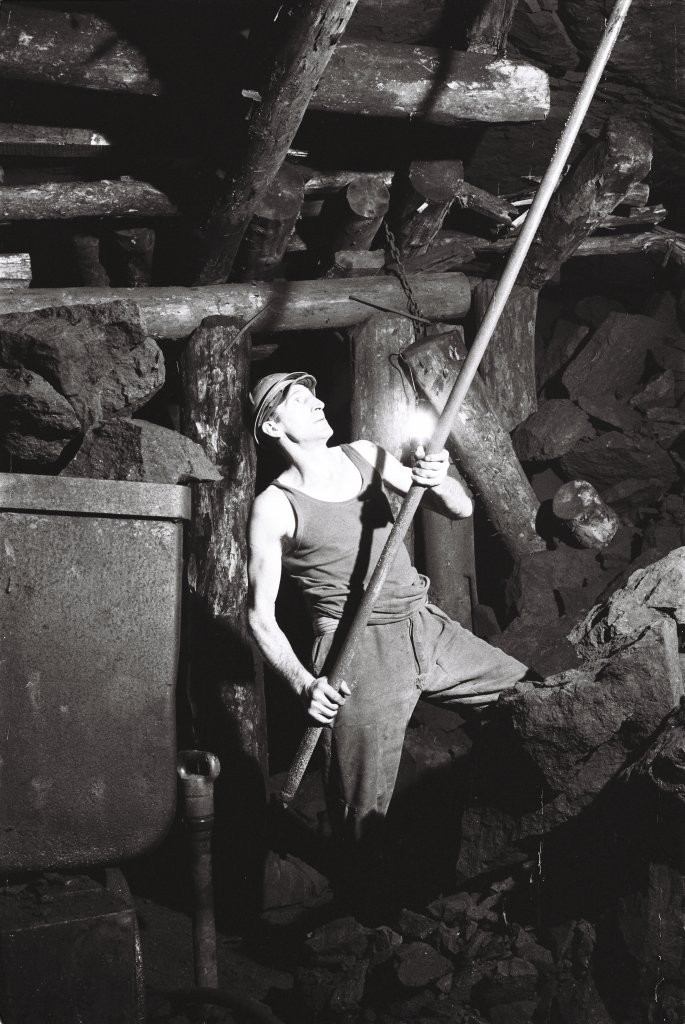
At the beginning of the 20th century, working in a mine in Luxembourg was part of the daily life of thousands of men. It was demanding, deeply physical work that shaped an entire region.
Miners were paid by piecework: their wages depended on the weight of ore extracted. They also had to finance their own tools and explosives. To earn a sufficient income, workdays often exceeded 12 hours. Conditions were harsh, and the risks were ever-present: cave-ins, explosions, rockfalls, and accidents related to transport.
In 1907, a particularly tragic year, more than 45 miners lost their lives. Over the entire mining period, there were 1,477 deaths, an average of 13 per year, as well as approximately 70 reported injuries annually. At that time, there was no health insurance, no protection in case of accidents or old age.
Faced with these realities, the miners gradually began to organize.
First Steps Towards Organization
In the midst of the First World War, the first major trade unions emerged. Little by little, workers banded together to defend their interests and make their voices heard.
These advances were not solely the result of political decisions. They stemmed from a genuine power struggle, between worker mobilizations and negotiations with employers and the state. It is in this context that what is now known as the “Luxembourg model” gradually took shape, based on social dialogue and the search for compromise.
In 1918, a first legislative advance was achieved with the establishment of the eight-hour workday by Grand-Ducal decree. On paper, this was a major development. In reality, however, its implementation remained gradual in the mines.
The Major Stages of a Social Conquest
Over the decades, workers’ struggles profoundly transformed working conditions:
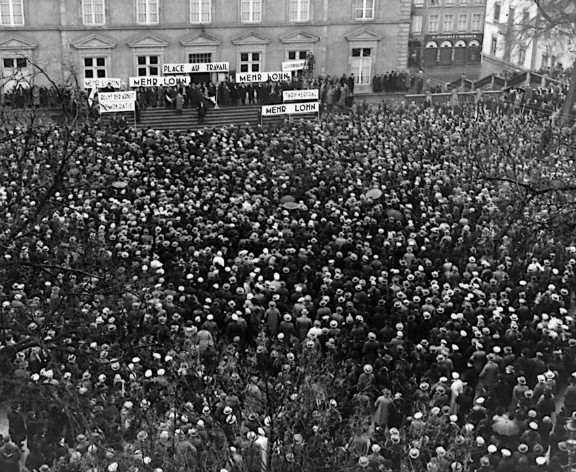
1936: 40,000 workers demonstrate → creation of the National Labor Council and the first collective bargaining agreements
1944: introduction of the minimum social wage, indexed to the cost of living from 1951
1953: strike in the steel industry → reduction from 56 to 48 hours per week without loss of pay
1955–1956: demand for a 40-hour week → compromise of 44 hours and 16 additional days off
1959: national demonstration (20,000 workers) → wage increase of one franc per hour
1970–1975: the 40-hour week gradually becomes the legal standard
A development that still concerns us today
What seems obvious to us today—regulated working hours, a minimum wage, holidays— — is the result of decades of evolution, negotiation, and collective commitment.
The history of Luxembourg’s miners is not limited to ore extraction. It is also the story of men who, together, contributed to the evolution of society and laid the foundations of the social model we know today.
Photo credits: Luxembourg City Photo Library, Théo Mey + LCGB