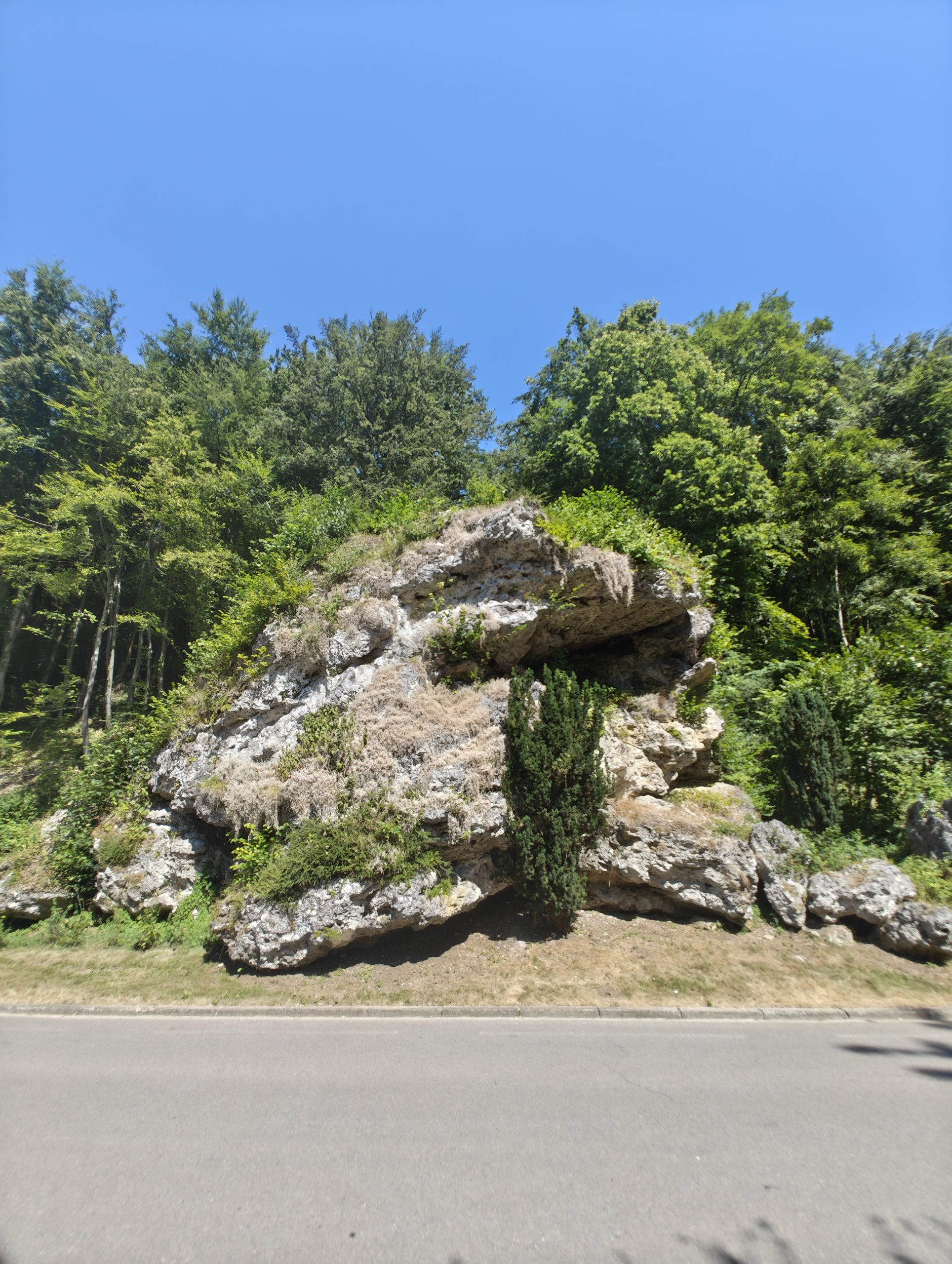
THE CRON ROCK: BETWEEN LEGEND AND GEOLOGY
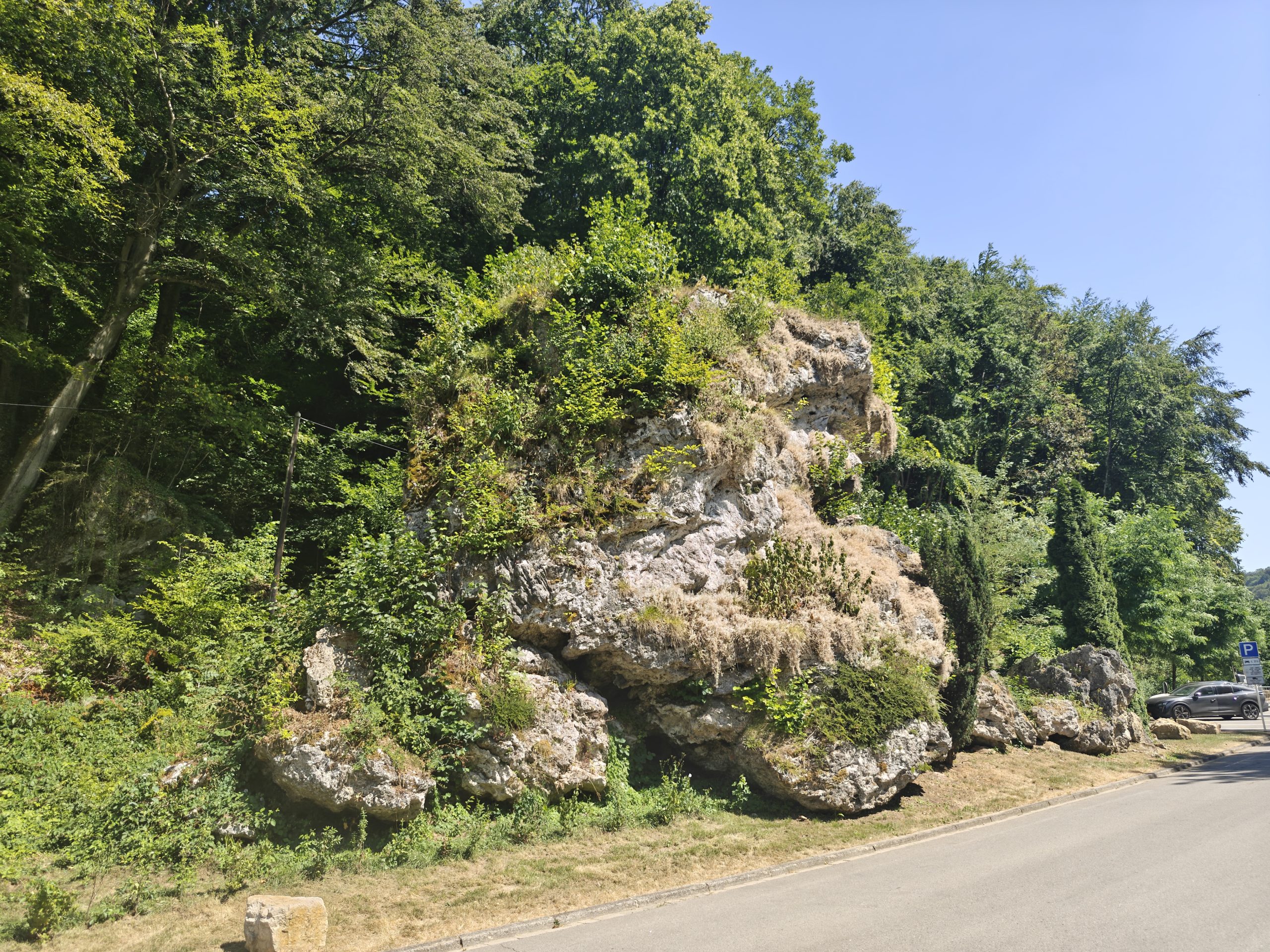
The Cron Rock is a unique relic of the past and one of Lasauvage’s most striking landmarks. Standing 11 metres high, this impressive rock is impossible to miss.
The Cron Rock plays an important role in the legend of the Wild Woman of Lasauvage. The story originates from Sagenschatz des Luxemburger Landes by N. Gredt. According to the legend, before the ironworks were built, a wild woman lived in the valley where Lasauvage now stands. She made her home in one of the caves of the Cron Rock. Her appearance was terrifying: her entire body was covered with thick hair, and she had frightening teeth.
The legend tells that a hermit from the forest of Selomont called upon Saint Donatus to banish the spirit of the Wild Woman beyond the seas. At that very moment, the Cron Rock began to tremble and slid to the place where it stands today, burying the sleeping Wild Woman beneath it.
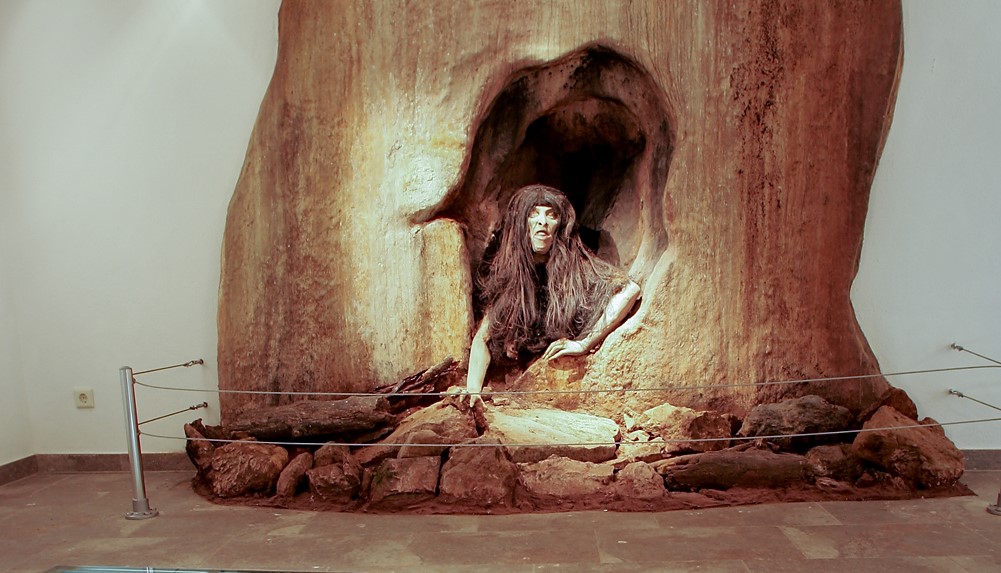 Espace muséologique Lasauvage - Differdange - © Claude Piscitelli
Although the legend offers a fascinating explanation for how the Cron Rock came to rest beside the road, its true origin is entirely natural. The rock was once part of the hillside. Over time, the tufa formation known as Cron continued to grow until it became too heavy, broke away from the slope, and rolled down.
The exact date of this event is unknown, but it certainly occurred before 1810, as the rock already appears beside the road on a map drawn that year. Additional rockfalls occurred on 10 August 1880 and 1 November 1992.
In the Belgian-Lorraine region, the word Cron refers to an accumulation of calcareous tufa or travertine formed around springs or streams. It consists of compacted layers of limestone interspersed with organic material such as leaves and plant remains. As calcium-rich water seeps through the rock, calcium carbonate is deposited, gradually forming the tufa.
Cron stone was already used by the Romans, for example in the construction of the Roman villa at Echternach. Later, it was also quarried industrially in Echternach for the manufacture of ceramic products.